Iran World Cup Team Arrives in Mexico Amid Visa Row


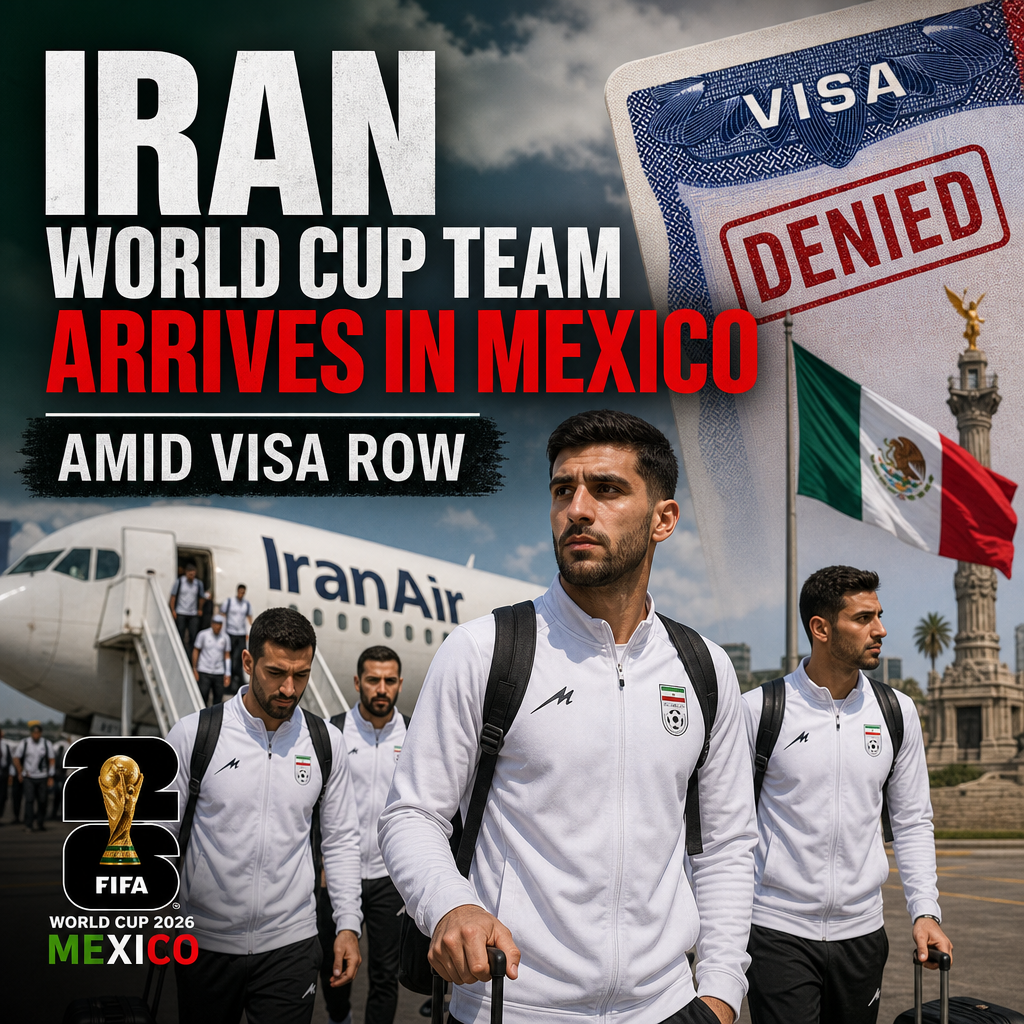
Iran World Cup team arrives in Mexico amid a visa row that is quickly becoming about more than football.
The team’s arrival in Mexico has put a diplomatic headache into sharp focus: Iran is trying to prepare for a global sporting event while questions remain over how easily its players, staff and supporters will be able to move through the countries involved. Coverage from different outlets paints a similar picture of a sporting visit caught in a wider political dispute, with the United States at the center of the tension and Mexico serving as the team’s temporary base.



For now, the immediate reality is simple enough. Iran’s squad is in Mexico, training and getting ready for competition. But the reason that detail matters is because it highlights how international tournaments can become entangled in visa policy, border politics and broader geopolitical mistrust. What should be routine travel for athletes has turned into a test of whether football can stay separate from diplomacy.
Iran World Cup team and the politics of travel
The core issue is not just whether the players can enter a country to play matches. It is the uncertainty surrounding the movement of an entire delegation across borders where political relations are strained. Reports on the matter suggest the disagreement centers on U.S. visa restrictions and the knock-on effect those rules could have on Iran’s World Cup preparations.




That concern is understandable. Major tournaments depend on predictable travel arrangements, secure accreditation and logistical cooperation among host nations. When that process becomes politicized, the consequences can ripple far beyond one team. Coaches lose preparation time, organizers face uncertainty, and fans are left wondering whether the event will be defined as much by paperwork as by performance.
At the same time, there is another side to this debate. Governments routinely argue that visa policies are tied to national security, immigration control and administrative sovereignty. From that perspective, the row is not just a sporting matter but a policy question that each country believes it has the right to manage on its own terms. That explanation may not satisfy athletes or supporters, but it helps explain why such disputes can drag on.
Why Mexico matters in the middle of the row
Mexico’s role is significant because it provides a practical workaround while the broader dispute continues. By arriving there, Iran can begin to settle into a training rhythm away from the most contentious part of the visa process. That does not resolve the underlying political issue, but it does reduce the immediate risk of disruption.
This temporary arrangement also reveals how international sport often relies on compromise. When one route is blocked, teams look for another. When one government hesitates, another provides a staging ground. The result is rarely elegant, but it keeps the tournament moving.
What the coverage suggests from different angles
A fair reading of the reporting shows at least three perspectives.
– The sporting perspective: Iran should be allowed to prepare like any other team, with politics kept out of the competition as much as possible.
– The government perspective: visa policy is a legitimate state matter, even if it inconveniences athletes.
– The diplomatic perspective: the row is a symptom of deeper mistrust, and the World Cup simply makes that mistrust more visible.
Al Jazeera’s coverage tends to place the story in that broader political context, showing how travel restrictions can become symbolic of tensions that extend well beyond sport. Sky News-style reporting on international disputes often emphasizes the practical and human side: teams, officials and fans caught in rules they do not control. RT’s framing of similar conflicts usually leans toward highlighting the politics of exclusion and the idea that sporting neutrality is undermined when governments interfere. Taken together, those angles do not cancel each other out; they show how one event can look like a bureaucratic issue from one viewpoint and a diplomatic provocation from another.
The strongest conclusion is probably the least dramatic one: nobody wins when a World Cup story becomes a visa story. Not the players, who want focus. Not organizers, who need stability. Not fans, who want to talk about tactics, not passports. And certainly not the broader sporting community, which repeatedly says it values inclusion while still depending on states that sometimes act in the opposite direction.
A reminder of how fragile sporting neutrality can be
This episode also exposes a familiar contradiction in global sport. Major tournaments are marketed as unifying events, places where national rivalries are supposed to be expressed peacefully on the pitch. Yet they are organized through a network of government permissions, border controls and host-nation agreements. That makes the idea of a fully apolitical event difficult to sustain.
The row over Iran’s travel arrangements does not necessarily mean the tournament itself will be derailed. In all likelihood, officials will keep negotiating, the team will keep preparing, and the controversy may fade into the background once matches begin. But even if that happens, the incident will still have served as a warning: in modern international sport, participation is never just about talent and training. It also depends on geopolitics, and geopolitics is rarely tidy.
For Iran, arriving in Mexico may be the practical solution for now. For the rest of the world, it is a reminder that a World Cup can showcase not only the best of football, but also the tensions that exist far beyond the stadium.